


Pixel headlights, also known as matrix headlights or pixelated LED headlights, are an advanced vehicle lighting technology that combines multiple small LED units into a high-resolution light source. They offer the following advantages:
- Precise beam control: Pixel headlights can precisely control the brightness and direction of each LED unit, providing highly customizable lighting patterns to adapt to different driving environments and needs.
- Reduced glare: In high beam mode, pixel headlights can automatically adjust the beam direction and brightness to avoid dazzling oncoming vehicles while keeping the driver's view clear.
- Better visibility: By adjusting different LED units, pixel headlights can illuminate specific areas of the road without disturbing other drivers, enhancing the driver's field of vision and clarity.
- Dynamic lighting: Pixel headlights can dynamically adjust light distribution based on vehicle speed, steering angle, and traffic conditions, providing a safer and more comfortable driving experience.
- Image projection: Some pixel headlight technologies can project images or symbols onto the road, such as traffic signs, warning messages, or other navigation assistance graphics.
- Energy-efficient: Pixel headlights typically use LED technology, which is more energy-efficient than traditional halogen or xenon lights and has a longer lifespan.
- Design flexibility: The design of pixel headlights is more flexible, allowing them to be integrated into the vehicle's front design, enhancing the vehicle's appearance and style.
- Automatic adaptation: Pixel headlights can integrate with other vehicle systems (such as sensors, cameras, and navigation systems) to automatically adapt to various driving conditions.
- Increased safety: By providing better illumination, pixel headlights help improve driving safety at night and in adverse weather conditions.
- Future upgrade potential: With technological advancements, pixel headlights can enhance their functions through software updates, providing possibilities for the future development of vehicle lighting technology.
Pixel headlights offer drivers a safer, more comfortable, and smarter driving experience through their highly customizable and intelligent lighting capabilities.
►Application Scenarios
►Product Images
►Display Board Photos

►Functional Block Diagram
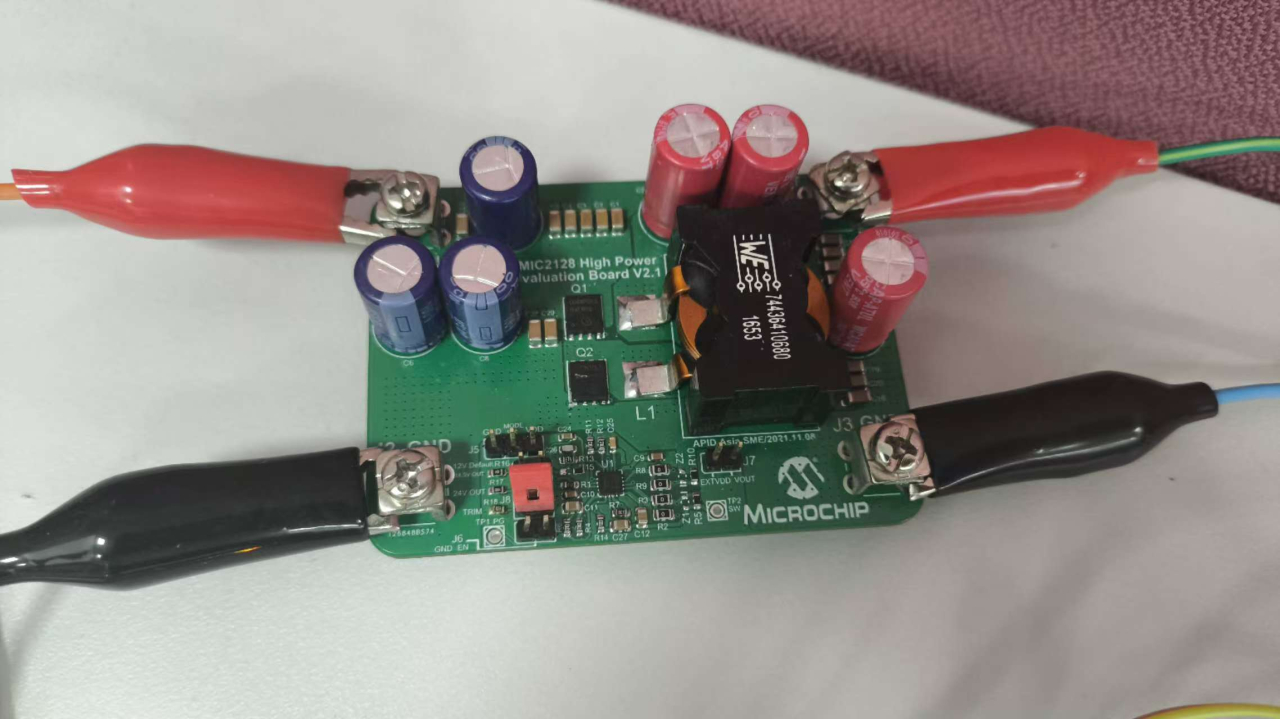
►Microchip MIC2128 High Voltage High Current Synchronous Buck Power Supply
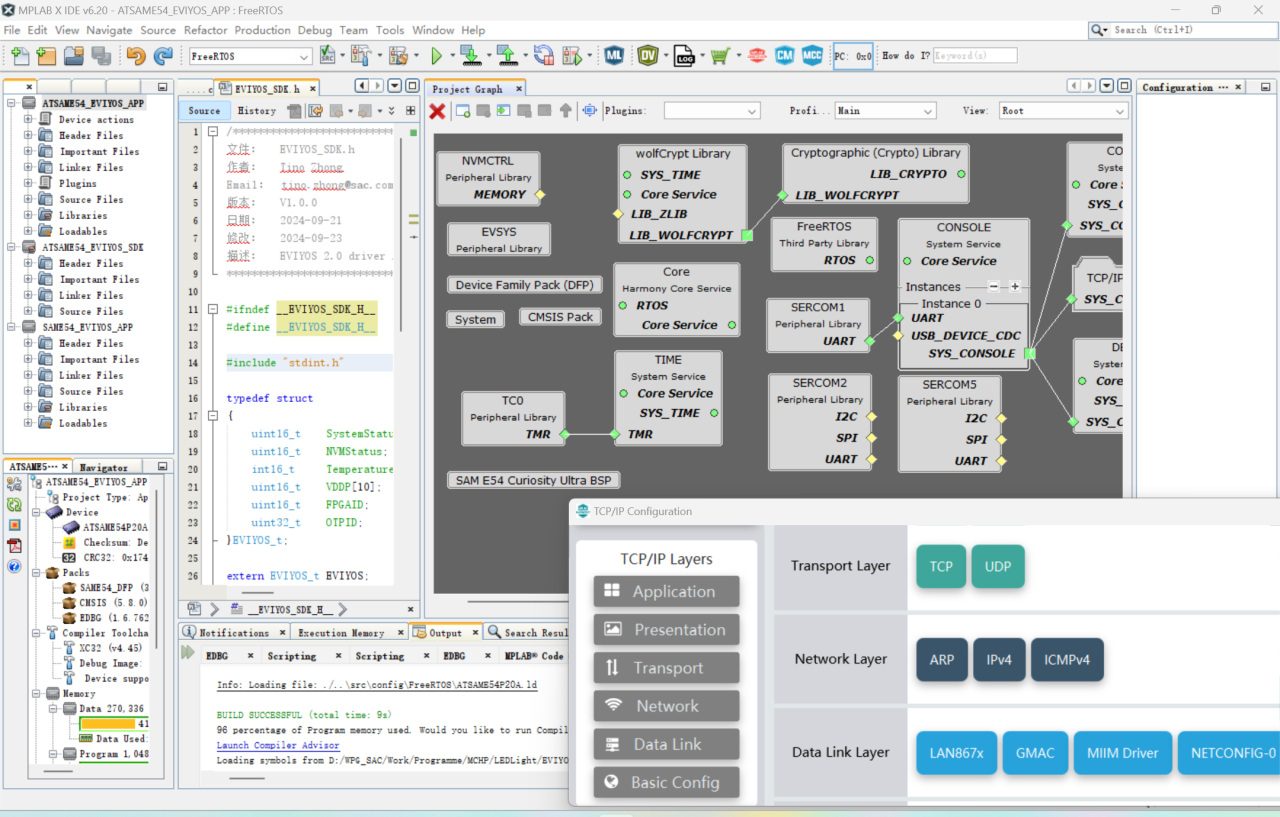
►Microchip MPLAB X IDE Graphical Development Environment
►Core Technical Advantages
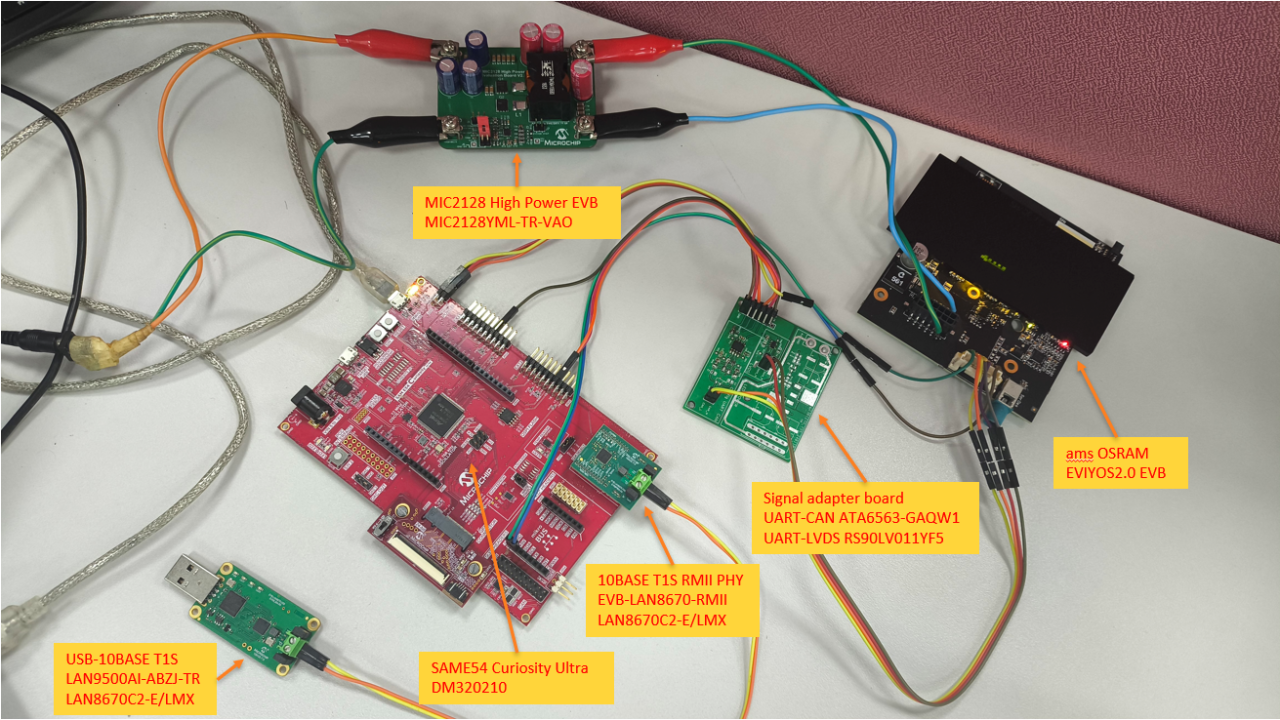
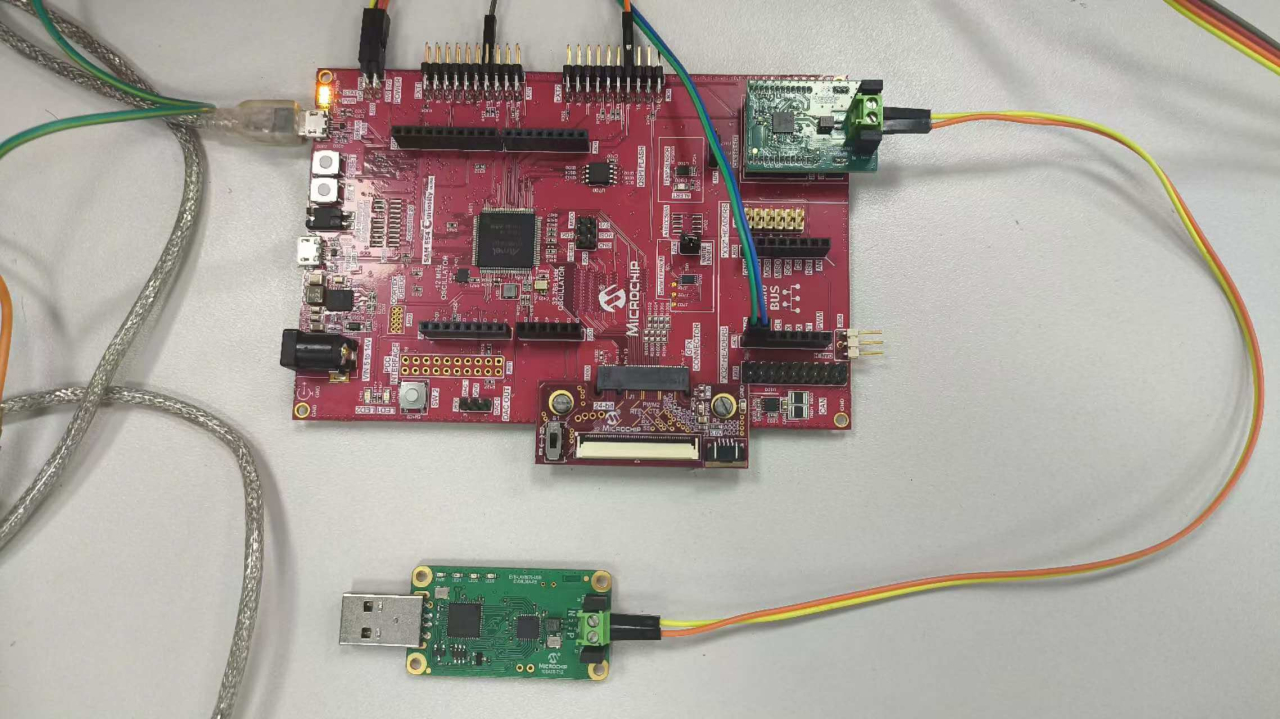
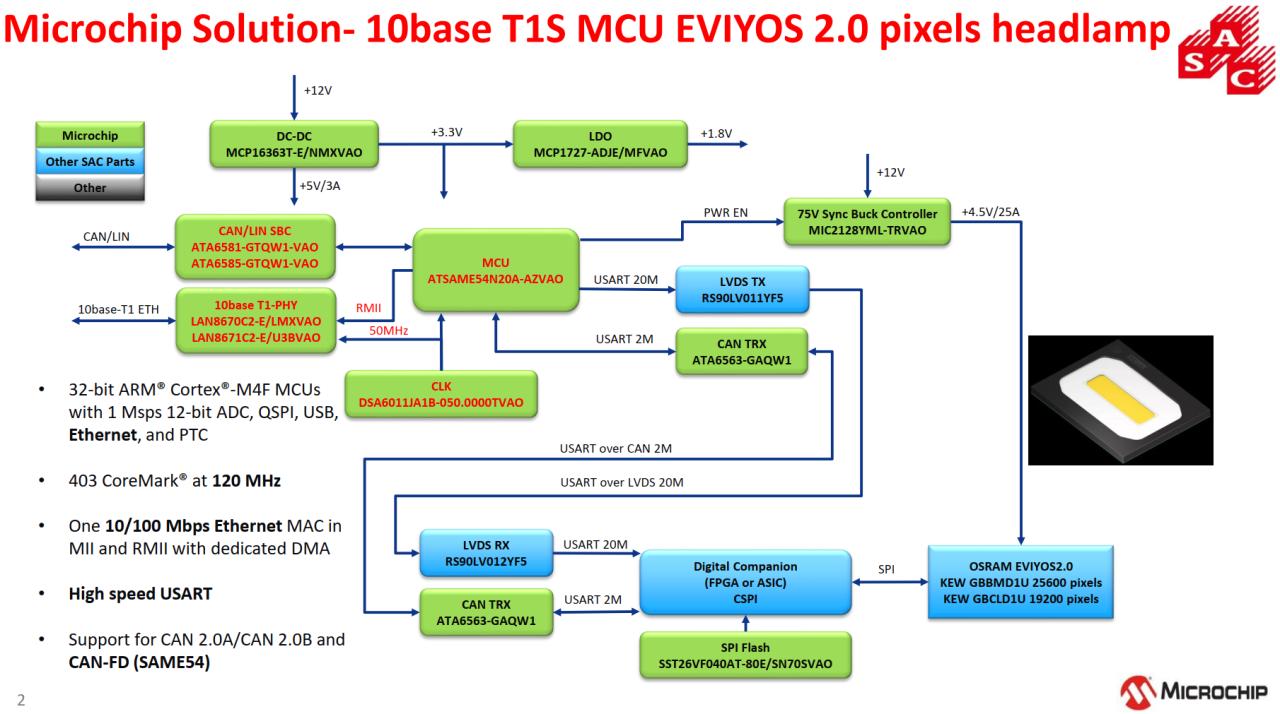
1. Utilizing ams OSRAM's EVIYOS 2.0 integrated pixelated LED, which includes 25,600 independently controllable light pixels, it can easily achieve high resolution and anti-glare intelligent high beam, image and safety warning projection, precise road illumination, and more, enhancing the performance of the vehicle lighting system while innovatively improving the safety of the driver and surrounding personnel. 2. Using the Microchip ATSAME54 120MHz high-performance MCU as the main control unit, running the FreeRTOS system, and configuring and communicating video data with EVIYOS via high-speed USART. An external LAN8670 10base T1-PHY is connected through the Ethernet RMII interface to achieve 10M in-vehicle Ethernet communication. 3. Real-time video transmission is achieved through standard network video streaming protocols, allowing you to simply understand pixel headlights as a display screen with an Ethernet interface, showing whatever is played on the host. There is no need to store images and videos on the headlights, nor is OTA required, which reduces costs while greatly enhancing the flexibility and scalability of the displayed content. 4. Utilizing the Microchip high voltage high current synchronous buck controller MIC2128 with external MOS and inductors to form a synchronous buck power supply, providing power to the LEDs with an output of 4.5V/25A. 5. Pinjia Group provides the ATSAME54_EVIYOS_SDK and example project source code to help customers quickly set up the development environment and light up the EVIYOS LED.
►Specifications
Input Voltage: DC 9V~24V LED Light Source: ams OSRAM EVIYOS 2.0 Pixel Matrix: KEW GBBMD1U 320x80 25,600 pixels, KEW GBCLD1U 240x80 19,200 pixels Main Control MCU: ATSAME54 32-bit ARM® Cortex®-M4F, 403 CoreMark® at 120 MHz, Ethernet interface CAN Communication: Supports CAN-FD communication LIN Communication: Supports LIN communication Ethernet Communication: LAN8670/LAN8671 10base T1S 10M in-vehicle Ethernet Rated Power: 100W Maximum Power: 200W Temperature Monitoring: Real-time monitoring of LED light source temperature for automatic temperature control