


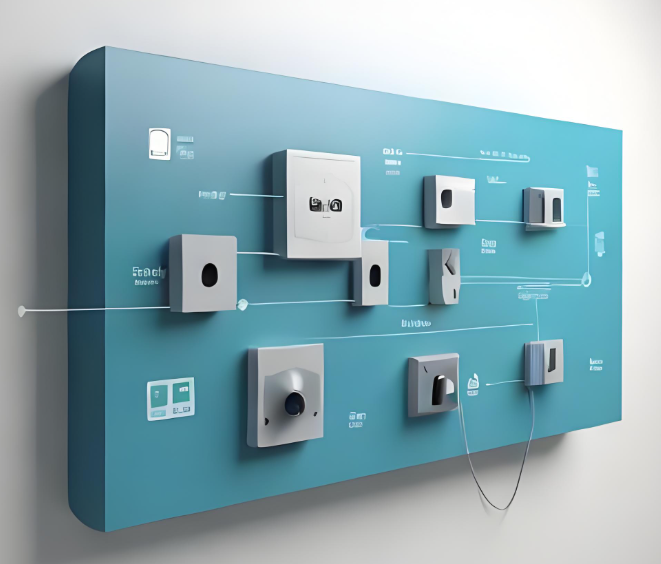
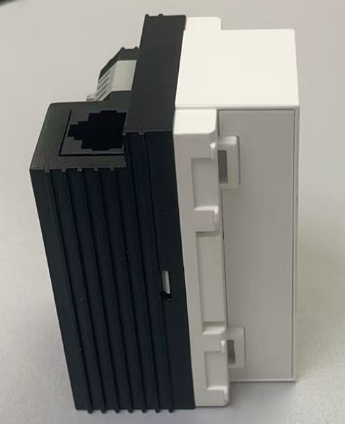
A wireless in-wall AP (Access Point) is a network device installed on the wall, primarily used to extend the coverage of a wireless network. Due to its compact size and low power consumption, this type of device is particularly suitable for use in homes, offices, or other locations requiring wireless network coverage.
The low-power design of in-wall APs is of significant importance, primarily for the following reasons:
1. Extend device battery life
Low-power design can effectively reduce energy consumption, thereby extending the operational lifespan of devices. This is particularly important in scenarios that rely on battery power, such as smart home devices.
2. Reduce heat accumulation
High-power consumption devices tend to generate excessive heat, which may lead to performance degradation or component aging. By implementing low-power consumption designs, the heat generation issue can be significantly reduced, thereby improving the device's lifespan.
3. Reduce energy consumption costs
Wall-mounted APs are typically deployed in commercial or industrial settings, and their low-power design can reduce the annual energy consumption of the devices. For instance, the annual energy consumption of traditional APs may reach up to 5,475 kWh, whereas the low-power design can significantly lower electricity costs.
4. Improve system stability
Low-power design can also reduce electromagnetic interference and circuit noise, thereby enhancing the operational reliability of devices in harsh environments such as high temperatures and confined spaces.
In the power consumption composition of AP products, aside from the main control chip, the RF front-end module (FEM, Front-End Module) is the largest energy-consuming component. FEM products typically operate in a standard +5V power supply environment, while wall-mounted APs with compact designs often require the FEM and the main control chip to share a single low-voltage power supply. This design imposes higher demands on the FEM, requiring it to have a wide voltage adaptability and maintain low power consumption under low voltage conditions to ensure the overall energy efficiency of the device.

Figure 1: +3.3V Output Power vs Current
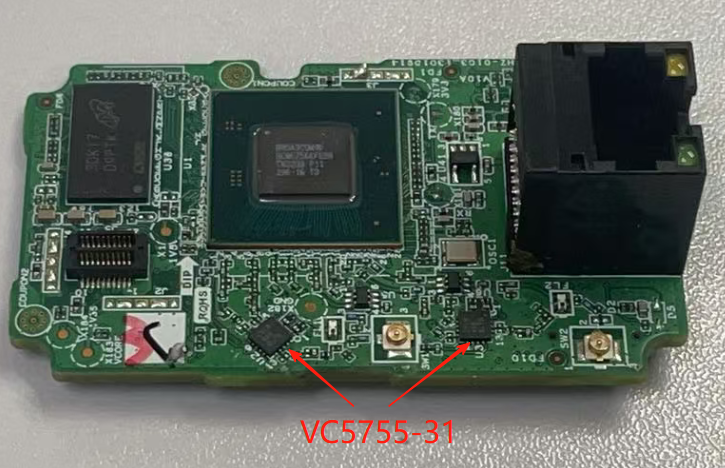
Here are 5 frequently asked questions (FAQ) about the Vanchip VC5755-31 chip, compiled from relevant technical documents and testing guidelines:
Q1: What WiFi protocols does VC5755-31 support?
A1:VC5755-31Supports IEEE 802.11a/n/ac/ax protocols.
Q2: How to test the specification nominal parameters of FEM?
A2: The product's pin interface design is compatible with mainstream standards. Users can perform tests in the EVB board environment.
Q3: How to verify and evaluate the heat generation of FEM?
A3: Vanchip will provide the thermal resistance parameters of the FEM to assist customers in thermal simulation.
Q4: Does the power supply for VC5755-31 support 4.2V?
A4: Vanchip FEM supports a wide voltage range.
Q5: Will the receiving sensitivity decrease at 3.3V low voltage compared to 5V?
A5: 3.3V does not affect reception sensitivity.
►场景应用图
►产品实体图
►展示板照片
►方案方块图
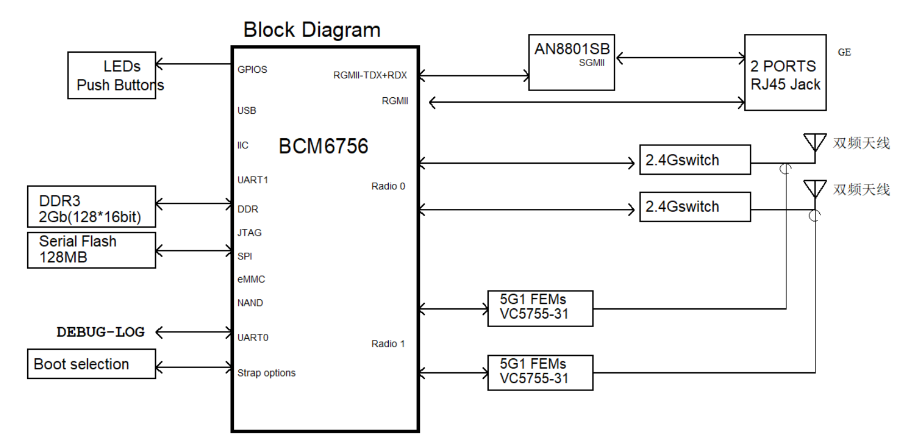
►核心技术优势
► Devices compliant with IEEE 802.11a/n/ac/ax WLAN standards ► Small package size, low cost, low power consumption, and long product lifecycle ► Superior gain flatness, with smaller fluctuations indicating higher signal stability ► Supports a wide voltage range for enhanced stability ► Integrated transmitter with a logarithmic power detector featuring voltage output
►方案规格
► Frequency range: 5.15~5.85GHz ► Linear output power (typical) for IEEE802.11ax: +14dBm MCS11 HE160 43dB EVM @3.3V ► Linear output power (typical) for IEEE802.11ac: +17.5dBm MCS9 VHT80 35dB DEVM @3.3V ► Transmit gain: 30dB ► Receive gain: 15dB